2018/02/24

Maccha Tiramisu - Maccha House-

The tea room “ MACCHA HOUSE” has deployed 12 branches mainly in Asia region including Singapore and Hong Kong. 

I went to the Osaka branch.


Their signature is matcha tiramisu in a wooden cup known as “masu”. What a beautiful Matcha! Lovely color, and delicate and fine powder!

This matcha is from a tea company “Morihan”. No wonder! Morihan, founded in 1863, is known as one of the best in Kyoto. 

Not only looks beautiful, but tastes wonderful!! Once you take a bite, a pleasant bitterness and rich aroma will fill in your mouth together nicely with mascarpone! Yum-yum!! Actually, I had it with a bowl of Matcha. I did enjoy so much Matcha. 

I haven't caught a cold this winter yet. I guess it's thanks to tons of catechin in tea. (Knock wood:-)) 


More menu items


2018/02/11

Hojicha Latte in Matcha Bowl


When you go to "Osaka Chakai" a Japanese tea room, you can choose not only tea but your tea cup. 

Their signature is freshly ground sencha. You can whisk your sencha with using a special bamboo whisk, which is fun.

The other day, instead of ground sencha, I ordered hojicha latte. Usually, people choose a mug for latte, but I chose a matcha bowl.  Actually, I am glad I did. I like the latte in a bowl.


I had a slice of toast with roasted black soybean cream on it. I can say it is like peanut butter. It was good with hojicha latte.


This place has a lot of Japanese and I am sure you feel "Japan" a lot. When you happen to be in Osaka, why don't you visit? I am sure you will like it.


2018/02/06

Hoshun Cultivar

There are so many tea cultivars I haven't tried yet and I even don't know about. 
"Hoshun" is one of them. It was really new to me.


It’s a sencha made from thecultivar of Hoshun(鳳春), which literally means “Phoenix Spring”.    


<About hoshun> 
* developed in Kyoto and  registered in 2006. 
* a very early-ripening cultivar. 
* originally designed for gyokuro    

<About the tea> 
* The production area is Ujitawara where the current Sencha production technique was developed in 18th century. 
* Hand-picked tea  

<How to prepare recommended by Takemura Gyokusuien tea shop> 
Tea leaves 5g 
Temperature 60 degrees Celsius, 
Water amount 60ml water 
Steeping time: 60 seconds  


You may think that the preparation seems to be more the one for gyokuro, rather than sencha. But I could tell why they recommend us to prepare this way when I tasted it. 

Looks very pale, but surprisingly umami-rich as if it were gyokuro. It also has a hint of freshness, which is one of sencha's characters. 


Hoshun is not seen everywhere even in Kyoto yet, but I heard this is one of the promising cultivars especially for Kyoto tea industry. When you happen to find it, worth trying!    

Surely, you will get Hoshun sencha at thetea shop, Takemura Gyokusuien”, in Kyoto. 
* web: http://www.gyokusuien.com/s_top.html             

2018/01/29

Varietal Matcha and Tencha

I was fortunate to join a tea tasting hosted by Tyas Sōsen, a Belgian Japanese tea master. 


We tasted varietal matcha and tencha, the ingredient of matcha, both of which are produced from four different kinds of cultivars: Asahi, Ujihikari, Saemidori and Samidori.

brewing "tencha"


whisking matcha

Usually, you won't find tencha leaves at tea shops. Varietal matcha powder are not available either.  So it was a really lucky occasion. 

First, he showed us Asahi tencha leaves, the matcha powder, then brewed the tencha and prepared the matcha for us to taste. Then, Ujihikari, Samidori and Saemidori..... It might be difficult for you to distinguish from the photos, but let me tell you how they were.


ASAHI (the cultivar made from Uji native)
After checking Asahi tencha leaves and the matcha powder, we tasted the tencha. It was really pale. It tasted delicate and mild, but more decent body than I expected. Sooo relaxing.
Then, tasted matcha.  Looked so creamy. It tasted also creamy, delicate and mild. Really fluffy, and again, relaxing! The mildness remained at the back of my tongue for a while. What a nice long finish! I love it!

tencha
matcha
tea made from tencha -Asahi cultivar-

matcha -Asahi cultivar-


UJI HIKARI (the cultivar made from Uji native)
Ujihikari turn. Looked a bit darker than Asahi. It was refreshing. The taste of both tencha and matcha hit the tip of my tongue right after I drank.


SAEMIDORI (the cultivar made from Yabukita and Asatsuyu)
Last two cultivars (asahi and ujihikari), I could tell the connection between tencha and matcha. I mean the tencha and the matcha had a similar nuance. As for Saemidori, I felt that the taste of tencha and matcha were different. The tencha, it was so simple. I could say a bit boring. When Saemidori cultivar became matcha, it had a little bit of smokiness, and a good balance between Umami and bitterness.. The taste hit the tip of my tongue soon after I tasted and disappear once. Then it came back again at the back of my tongue. Interesting.


SAMIDORI (the cultivar made from Uji native)
I heard that more than half of matcha produced in Uji are made from Samidori cultivar.
The color of the leaves was the darkest. The taste wise, the strongest too. One of the guests said this tasted very “manly”. I agree. Very punchy. It's a good one for wake-me-up.


I knew the taste is different from cultivar and cultivar, but it was really fun and interesting to taste different cultivar's tencha and matcha. Even in Japan. matcha is getting more one of the ingredients for sweets and "fancy" drink than traditional matcha drink. Once people can see there are so many different cultivars and each one has different character, I believe that they will show more interest.

On that day, Mr Furukawa, a tea farmer also joined the gathering. All the tea we had were his. It was also a wonderful opportunity for us to talk directly with the farmer. Thank you.


left : Mr Furukawa (tea farmer) right; Tyas Soen (Japanese tea master)


2017/12/22

Tip for Preparing Matcha

Have you made a bowl of Matcha at home? Has your matcha gotten lumpy? 

A friend of mine working at a tea company in Kyoto gave me a tip about making Matcha without lump: that is, adding a bit of water.
 
1.Put some Matcha into a bowl. (about 1.5 to 2 tea scoops for one bowl).
2.Add a bit of water (not hot water) over the tea and knead them with a tea whisk.

 
3.Then pour hot water into the bowl and whisk it until it’s ready.

 Please do remember this is OK for you to prepare Matcha at home. It will never ever be done at a traditional Japanese tea ceremony. 

One more thing. Matcha doesn't have to be frothy. It really depends on the school. Urasenke school considers tea with bubble better while Omotesenke school doesn't. Omotesenke tries not to make the tea frothy.  (ref: Omotesenke needs 1.5 tea scoops of tea while Urasenke does 2 tea scoops of tea) 

Either way, this is worth trying!


2017/12/19

How to make "CHASEN (tea whisk)"

This is the way of making CHASEN (tea whisk).  
You will see Japanese master craftsmanship! Don't miss it!

* You Tube: Takayama tea whisk
https://www.youtube.com/watch?v=NI8oYMPC5Vo

* FYR, see the blog written on January, 2011
http://japaneseteastory.blogspot.jp/2011/01/craftsmanship-chasen.html


2017/12/16

"Kyakudo" = soil improvement

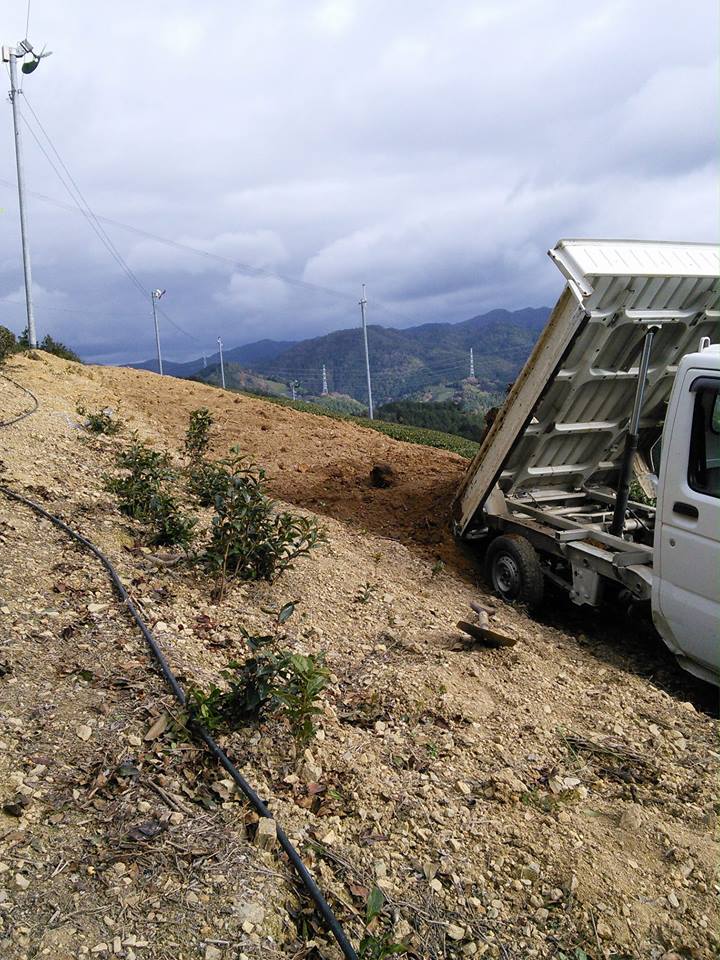
Kyakudo
---- To add fertile soil or soil from the different area into tea farm to improve the soil.

I’ve learned this word recently from a farmer that I know. Kyakudo literally means “guest soil” in Japanese. What an interesting word! It maybe natural for farmers to prepare good soil, but I re-recognize that “tea is not produced in a day”, and should appreciate their efforts.

doing kyakudo from Wazuka Black Tea Co.,Ltd

* Website; Wazuka Black Tea Co.,Ltd (KYOTO)  http://www.wazukakoucha.com/

Sakura Season

  Sakura is a feast for the eyes. Also a feast for the palate. Sencha named "sakura-hime (lit: sakura princess), which is blended with ...