2021/01/30

MY Hand-Made Osaka Black Tea

【Three and a half months old Osaka wakocha】

Last autumn, I made a small amount of black tea from leaves in a tiny tea garden that I sometime tend to. I made this just for fun, so I am not saying this is great, but compared to freshly-made tea, it has a little more citrusy aroma, savory flavor with a rounder texture, which is good news.


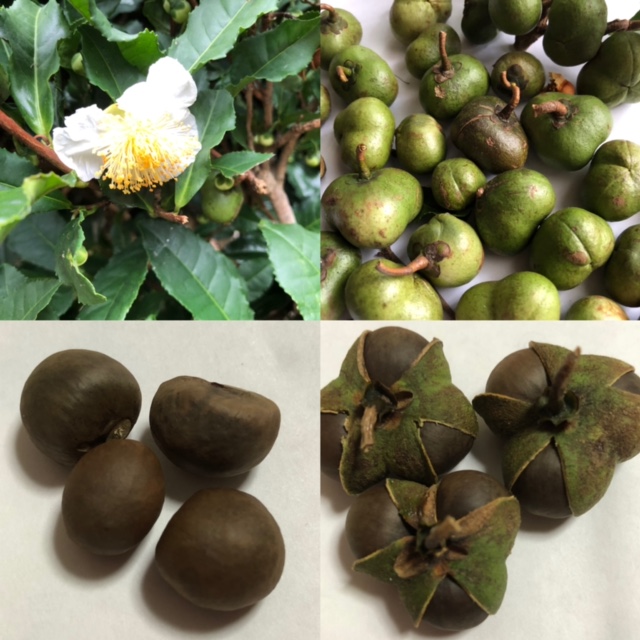
Since tea seeds are emerged from tea fruits, I soak them into water to see if they are likely to germinate. The sinkers are likely to do while floaters are not. Unfortunately, many of them seem to be duds....which is a sad news. 

Whatever it is, tea is fun.


2020/12/22

Snowing Mountain Tea in Yabe, Yame city

 【Wakocha by Mr Harashima at Yabe village, Yame city in Fukuoka】  


Yabe village is surrounded by mountains at 500-650 meters above sea level in Yame city, one of the well-known tea producing areas. Winter in the village is really harsh, and the tea fields are blanketed with snow at this time of year. The tea goes into hibernation while reserving nutrients, and wait long for spring. Mr Harashima produces beautiful organic tea including Sencha, Gyokuro, Wakocha (black tea), Hojicha etc. using such delicate but hardy buds and leaves. 


His wakocha, Yabukita cultivar, has a citrusy note with a hint of woodiness. Nicely round texture.


2020/12/16

Samurai Wakocha

<Wakocha by Mr Yamamoto, SAMURAI Teafarm in Makinohara, Shizuoka>

Mr Yamamoto’s ancestors served for Tokugawa shogunate, and started to develop Makinohara area for tea prod.uction in 1872. Their samurai spirit is still inherited in the name of the “SAMURAI teafarm”. The current owner, Mr Morihiko Yamamoto, is the 5th generation to run the farm, producing "tokumushicha" (deeper steamed fukamushicha) and wakocha (Japanese black tea) and so the list goes on.


1) His 2nd flush Benifuki cultivar's wakocha, bitten by leaf hopper, has a flowery note with a lingering finish


2) Roasted leafhopper-bitten 2nd flush Benifuki wakocha 

He roasts the tea meticulously, giving it a deep amber colour, and sweet flavour like ripened fruit and honey. When cool down, the beautiful fragrance stands out more, and it lasts long in a cup. 


Their Samurai spirit inherited from ancestors is also in the package:-). 


2020/12/02

Virtual Locally-Grown Tea Convention 2020

Annual national locally-grown tea convention hosted by a tea-growing village, Hinohara in Tokyo. Tea growers (who produce green tea and experimental teas like black tea) and tea lovers joined the event focusing on Japanese experimental teas. Unlike other years, it was a virtual event by REMO. 25 different kinds of wakocha (Japanese black tea), and a tea scoop made from the local cedar were sent to all the guests in advance. 


On that day, attendees enjoyed chatting with tea growers in a small group to ask about their tea while drinking, which was a great opportunity for all. 


After the event, I was honored to be invited to a meeting for 25 tea growers and stull members too. Good to hear that they exchanges their opinions about tea production to refine their tea, how they appeal tea to customers, how they pass down tea industry to next generations  etc.....Unfortunately, the consumption of tea has been decreasing, but their passion and sincerity will make it happen :-) 

2020/11/20

Japanese Green Oolong and Dark Oolong

Ehime prefecture is not a big tea producing area. Rather, it is well-known for mandarin oranges. In such area, Waki family has long been producing good organic green tea in the mountain area, Shingu town in Ehime. 

Their green tea is also used for hugely popular local sweets; Sencha custard pudding & Matcha daifuku (rice cake sweets).  Thanks to good tea, especially the daifuku is a big hit. Perfect balance of gentle sweetness of cream and anko (red bean paste) inside and pleasant bitterness of their matcha outside attracts so many people. 


Unfortunately, the consumption of green tea has been decreasing nationwide. So the 4th generation, Mr Junki Waki, has started making black and oolong teas in addition to green tea.

Green oolong (left) and Dark oolong (right )


Black tea known as Wakocha

He said this is a challenging for our future.


*Instagram https://www.instagram.com/tomokoh22/

2020/11/17

Asamiya tea - Koshun cultivar-

Sencha of “koshun” cultivar by Kitada family in Asamiya. 

Interestingly, koshun grown in Shizuoka has more milky note, but the one grown in Asamiya has flowery, herby and Sakura leafy flavour. Their glossy and deep green color leaves produce a round and rich texture. Very satisfying. Asamiya-cha is one of the best tea we should be proud of. Perfect with its local "kusamochi".


2020/11/13

Asamiya Tea Field

Asamiya is one of the oldest and the best tea-producing areas thanks to rich soil and climate, especially a big gap temperature between days and nights. Since the tea is often used as blend tea of “Uji cha”, it may not be well-known widely though.

Visited to Kitada family's tea gardens in Asamiya. Their gardens are dotted on the hilly areas, which is tough just to get there. But so beautifu land crispy air feels so refreshing. 


And surprised to see numerous fans, which is to protect young tea from frost in early spring.


For lunch, we visited a neighboring town, Shigaraki, which is well-known for Shigaraki ware including tea cup and kyusu (teapot). A figure representing “tanuki (racoon dog)” , which shows good luck, is more popular and everywhere.


Sakura Season

  Sakura is a feast for the eyes. Also a feast for the palate. Sencha named "sakura-hime (lit: sakura princess), which is blended with ...