2021/02/27

Matcha on Ice Cream

Sprinkle matcha on Ice cream. It might be hard to tell the difference on the photo, but a huge difference when you taste.

【Hand-picked matcha ground by stone mill (left)】  
            -- deeper and more vivid green in colour, finer texture,  milder and sweeter taste.
 
【Cooking grad matcha ground by machine (right) 】  
              -- a bit dull and yellowish green in colour, rougher texture, and bitter.


Both matcha are from Ujitawara city in Kyoto.
 

2021/02/22

Japanese Oolong in Mariko

 【Japanese Oolong by Mr Niroku Muramatsu in Shizuoka】

Mr Muramatsu,  who will turn 81 soon, is a leading tea master of Japanese black and oolong tea world. Without him, Japanese black tea industry wouldn't have revitalized as we see now. Unfortunately, bad things happened one after another to him last year, but his passion and love to tea never fades. Age is just a number.


Clear and golden liquor has a full of floral aroma like orchid. A round texture with a gentle aftertaste lingers  beautifully.

2021/02/12

Bancha

I found a harbinger of spring, "ume (Japanese plum)" blossoms at a local small shrine. 

I also found another sign of spring, "yomogi mochi (a Japanese herb flavored sweets)" at a tiny tea house in the shrine. How can I resist it!? Together with "bancha". 


Bancha is tea usually made from late summer or autumn leaves in a local method as a daily tea for local people. So when we say "bancha", it has different meanings and different characters from region to region. 


In any case, bancha is considered low-grade and inexpensive. But drinking bancha on such a beautiful place and day is priceless. It was what I felt grateful for on this day.


2021/02/06

Uji Cha LOVE Tea Party 2021

I joined a webinar from Ujitawara town known as “the birthplace of Japanese green tea” where Mr Soen Nagatani, who invented sencha production method, was born. 


We t
ried tasting flight using several kinds of wonderful tea (all made in Ujitawara) sent by the the town in advance.


1) From left to right: Sencha/Hand-picked Gyokuro / Kabusecha.

Especially, gyokuro is so beautiful. Glossy, dark green color and beautiful needle shape. Of course, it has a lot of umami.


 2) From left to right:Hand-picked Matcha /  Machine-picked Matcha /  Cooking grade Matcha 

Cooking grade has a bitterness, and the color is not vivid enough. On the other hand, hand-picked matcha has a smooth texture and milder and frothy when you make. 

When the situation gets better, I would love to visit Ujitawara again.

The farther of Japanese green tea, Mr Nagatani Soen and the house where he was born. 


2021/01/30

MY Hand-Made Osaka Black Tea

【Three and a half months old Osaka wakocha】

Last autumn, I made a small amount of black tea from leaves in a tiny tea garden that I sometime tend to. I made this just for fun, so I am not saying this is great, but compared to freshly-made tea, it has a little more citrusy aroma, savory flavor with a rounder texture, which is good news.


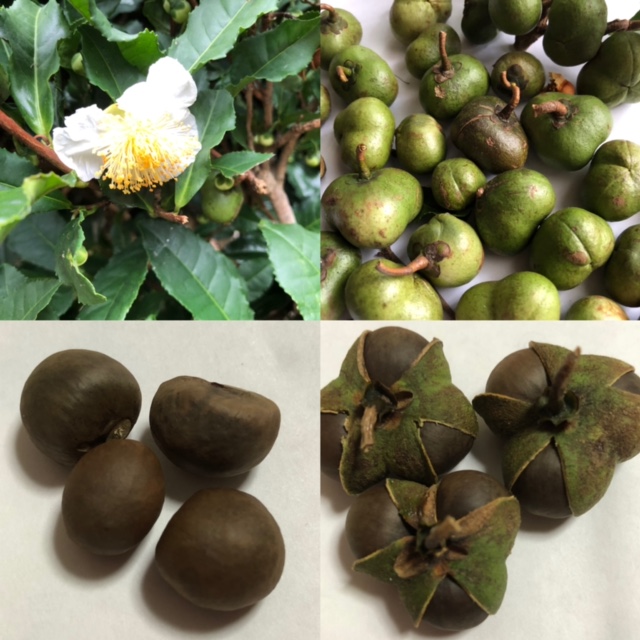
Since tea seeds are emerged from tea fruits, I soak them into water to see if they are likely to germinate. The sinkers are likely to do while floaters are not. Unfortunately, many of them seem to be duds....which is a sad news. 

Whatever it is, tea is fun.


2020/12/22

Snowing Mountain Tea in Yabe, Yame city

 【Wakocha by Mr Harashima at Yabe village, Yame city in Fukuoka】  


Yabe village is surrounded by mountains at 500-650 meters above sea level in Yame city, one of the well-known tea producing areas. Winter in the village is really harsh, and the tea fields are blanketed with snow at this time of year. The tea goes into hibernation while reserving nutrients, and wait long for spring. Mr Harashima produces beautiful organic tea including Sencha, Gyokuro, Wakocha (black tea), Hojicha etc. using such delicate but hardy buds and leaves. 


His wakocha, Yabukita cultivar, has a citrusy note with a hint of woodiness. Nicely round texture.


2020/12/16

Samurai Wakocha

<Wakocha by Mr Yamamoto, SAMURAI Teafarm in Makinohara, Shizuoka>

Mr Yamamoto’s ancestors served for Tokugawa shogunate, and started to develop Makinohara area for tea prod.uction in 1872. Their samurai spirit is still inherited in the name of the “SAMURAI teafarm”. The current owner, Mr Morihiko Yamamoto, is the 5th generation to run the farm, producing "tokumushicha" (deeper steamed fukamushicha) and wakocha (Japanese black tea) and so the list goes on.


1) His 2nd flush Benifuki cultivar's wakocha, bitten by leaf hopper, has a flowery note with a lingering finish


2) Roasted leafhopper-bitten 2nd flush Benifuki wakocha 

He roasts the tea meticulously, giving it a deep amber colour, and sweet flavour like ripened fruit and honey. When cool down, the beautiful fragrance stands out more, and it lasts long in a cup. 


Their Samurai spirit inherited from ancestors is also in the package:-). 


Sakura Season

  Sakura is a feast for the eyes. Also a feast for the palate. Sencha named "sakura-hime (lit: sakura princess), which is blended with ...