2019/03/21

Capsule Hotel like a Tea House

Have you heard about “capsule hotel (known as pod hotel) ” in Japan? Maybe you have stayed the place. According to Wikipedia, it is a type of hotel developed in Japan that features a large number of small bed-sized rooms known as capsules. Anyway….very tiny…

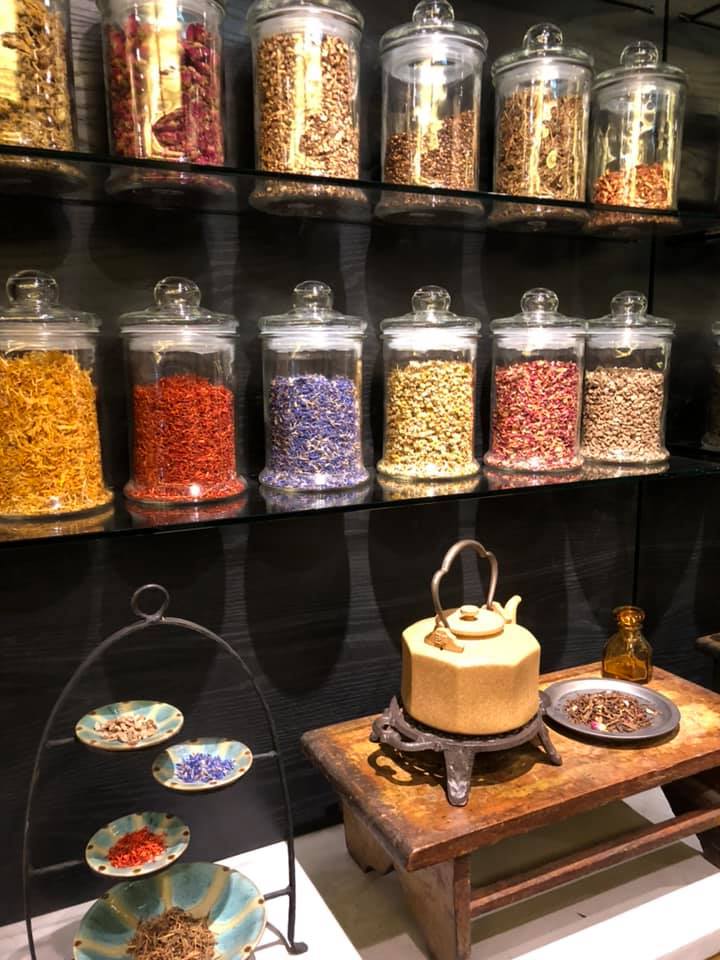
I just heard that a new type of capsule hotel named Zen Tokyo opened in Tokyo. It is inspired by a small tea house for Japanese traditional tea ceremony.

its website
If you are a tea person, this hotel can be an option for your accommodations. But  remember, this is tiny.....:-)

* Zen Tokyo  https://www.hotelzen.jp/

2019/03/10

Natural Farmed Tea


The tea is from Aso city where Mt. Aso, the largest active volcano in Japan, is located. 

Thanks to the farmer's great great care and the soil known as Andosols, formed in volcanit tephra, the tea was gentle but powerful even without any fertilizer or pesticide. Even fourth and fifth infusions, the tea had still subtle sweetness and descent body with a nice aftertaste. I felt like it nicely steeped into my whole body.

It was very refined, but at the same time I had a feeling that I'd known the taste.....

Many skilled tea producers in Japan, but unfortunately, I heard many people are struggling to continue their tea business because of various reasons like financial problem, a lack of successors etc. It will be a big loss for Japanese tea future if this tea wouldn't be continued to be produced....


*kamairi-ryokucha (pan-fired green tea)
*place: Aso, Kumamoto
*Zairai varietal (seed propagation)
*soil: Andosol
*farming method; Natural farming (No fertilizer, no pesticide)


2019/02/25

tea & bar at The Thousand Kyoto

I enjoyed Afternoon tea at the newly opened hotel in Kyoto. 

Their specialty is wide variety of Japanese tea, especially Wakocha (Japanese black tea). They serve five different kinds of Wakocha, and four different flavored Wakocha, which is very unusual and special to serve that wide selection of the tea at such a luxurious tea room like here.


In addition the Hotel's original four kinds flavored tea and a Shizuoka smoky Wakocha, 
they have these.
1. The hotel original blend (from Wazuka in Kyoto)
2. Yabukita cultivar tea (from Shizuoka, Tokai region)
3, Benihikari cultivar tea (from Nara, Kansai region)
4. Blend tea (from Kochi, Shikoku region)
5 Benifuki cultivar tea (from Kagoshima, Kyusu region)


I went there for Afternoon tea with the grower of Kagoshima Benifuki tea. Both of us are big tea drinkers, and we had a lot of tea.... Actually, 6 different kind of the tea together. The stuff members brew each tea very carefully, and we could see how they treated the teas. 

All the tea are shining, and very aromatic!


Of course, the food was very tasty and Kyoto-ish, especially savory ones.


There are also various kinds of green tea including Gyokuro, several Sencha, Hojicha  and Matcha, of course. Why don't you drop at "tea&bar" at the hotel, The Thousand Kyoto, to try some teas!


THE THOUSAND KYOTO

2019/02/12

"Full-course" Sweets with Japanese Tea

At the sweets shop "LE MUSEE DE H" run by Mr Tsujiguchi, one of the most famous patissier in Japan in Kanazawa city in Ishikawa.


<First course>
Plum jerry with greening apple sauce together with Yuzu citrus flavor oolong tea


<Second Course>
Gyokuro from Uji-Tawara in Kyoto is served.  

The first and the second infusion are served with the special tea cup.


While enjoying the sweets and tea, Yubukita cultivar tea is being roasted on a tea incense burner known as "cha-koro"


The third infusion is served with a bigger cup.
Used Gyokuro leaves with a bit of soy sauce, which is very tasty. 


<Third course>

Hojicha (roasted tea) fresh from "cha-koro"is served. The roasted aroma is good with fondant au chocolate. If you like, why don't you put yuzu citrus sauce in the white cup on the sweets?  You will love the combination of rich dark chocolate and refreshing yozu tastes! 

*
 LE MUSEE DE H in Kanazawa  (Japanese only)
https://le-musee-de-h.jp/shops/kanazawa.html


2019/01/21

Something UJI

I went to Uji in Kyoto, one of the famous tea cities in Japan, to attend a tea workshop the other day. Before the workshop, I had lunch at a tea shop at near the Uji station.

This is herring matcha soba (buckwheat noodles) 


Herring soba is one of the Kyoto local foods. Herring cooked in a mixture of sugar and soy sauce does really go well with savory soup. Since it was really cold day, the soba was the perfect food to warm myself up. Usually, soba is just simple soba, not macha soba. Because I was in Uji, the shop made it Uji-ish. 

 "Tsukudani (small dish simmered in soy sauce and  mirin seasoning) " made from tea leaves was served with the noodles as garnishing. Please don't say that this doesn't look like appetizing. Actually, very tasty and very Uji-ish again! I’ve been to the city many times before, but whenever I visit, I always feel like something "Uji".


If you prefer something sweet, they serve matcha sweets too.including strawberry and matcha parfait.


One more thing. You'll find a huge tea jar at the station. This is not just a decoration, it's used as a postbox. When you visit Uji, why don't you post a card to your family or friends from the tea city?

2019/01/12

Japanese Wellness Tea

The article I read says that the trend of health, well-being and wellness continues to be a major drive in the UK and US tea markets in 2019. Japan is no exception.

Recently, an Osaka-based Japanese tea shop has launched their new wellness tea brand.


There are about 60 different kinds of wellness teas. They are not infusion, which means all the teas have actual Japanese tea (Sencha, hojicha, genmaicha, wakocha, kukicha, or kukihojicha) and blend with some other herbs and botanical stuff like: 

hatomugi (Job's Tear's)
dokudami (Hourruynia cordata)...according to Wikipedia:-)
kinkan (kumquat)
gobo(burdock)
kanzo (licorice)
amachazuru (five leaf ginseng)
yomogi (mugwojrt)
aroe(aloe)
natsume (Jujube)
kuko (Gojiberry)
ukon (turmeric)

to name but few......

I believe some are very Japanese or Asian plants, and don't sound familiar or even appetizing either. But all of them have efficacy respectively and Japanese have been taking them for long.


You may call them as “functional teas” in English. Again, there are 60 different kinds of teas. I am sure you will find to suit you.


2019/01/08

Goishicha - Japanese post fermented tea -

There are some dark tea (post-fermented tea) in Japan. One of them is “Goishicha” produced only in Otoyo town, Kochi prefecture.


The process of the tea requires a great deal of labor.
Pluck the tea leaves around July. Steam the leaves in a barrel for a couple of hours. Remove the twigs, cover them with straw mats and let them rest for a couple of days. Pickle them in a barrel another couple of days, which is lactic fermentation. Take the leaves out of the barrel and cut them into 3-4cm cubes. Place them on the mat for anther couple of days again to dry them under the sun…… It takes about 60 days after the leaves are plucked. Hard work, isn’t it?
 
Actually, this tea was about to disappear due to the decrease in consumption, and such a hard work. But thanks to local government support and the recent health-oriented trend, Goishicha has been drawing world’s attention again. And now, even the Goishicha tea bags are seen at some local super markets.


 It has a very distinctive sour flavor, so you either love it or hate it. If you are not sure about the sour taste, cold brew Goishicha is recommended.

Sakura Season

  Sakura is a feast for the eyes. Also a feast for the palate. Sencha named "sakura-hime (lit: sakura princess), which is blended with ...